By Ademola Oshodi
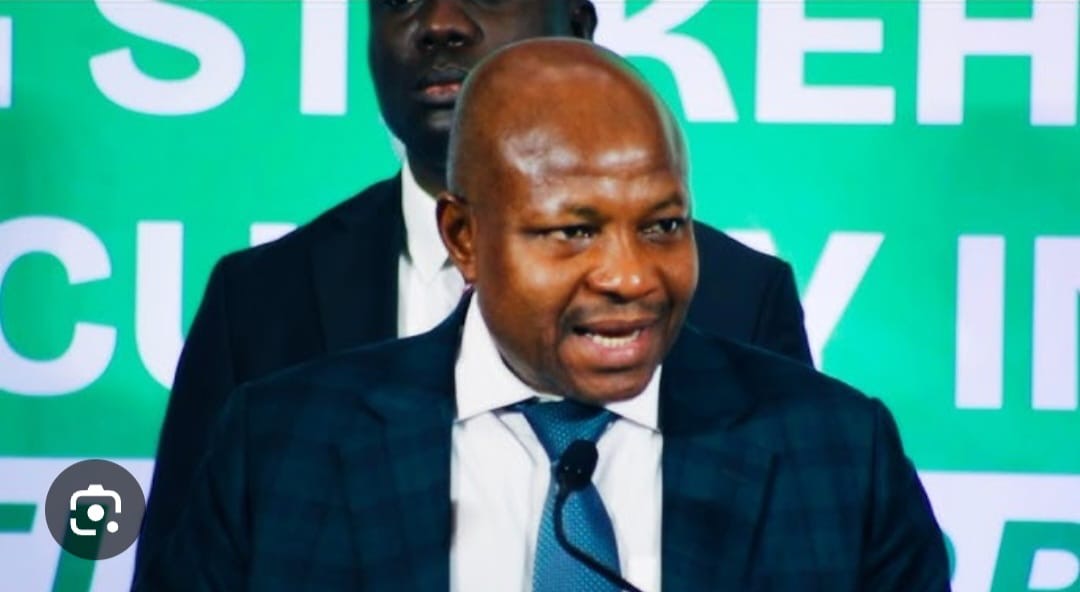
West Africa’s democratic breakdowns have increasingly followed a predictable sequence. Civic space narrows, dissent is reframed as a security problem, and coercive institutions begin to set the boundaries of permissible speech long before constitutions are suspended. In that context, the decision by the Nigerian National Committee of the International Press Institute to confer a Press Freedom Commendation Award on the Director-General of the Department of State Services, Mr. Oluwatosin Ajayi, deserves attention beyond the familiar cycle of praise.

The award provides a lens for assessing how Nigeria is governing the relationship between intelligence power and democratic accountability, and what that posture signals about Nigeria’s leadership and soft power diplomacy in West Africa.
The International Press Institute, founded in 1950 and headquartered in Vienna, operates as a global network of editors, media executives, and senior journalists focused on press freedom and the rule of law. Its national committees, including Nigeria’s, are designed to scrutinise state conduct where security power intersects with civic space. When such a body recognises the head of a domestic intelligence service, the recognition functions as a public judgement about institutional behaviour. It is an assessment that an institution traditionally associated with secrecy and coercive authority has exercised restraint, legality, and dialogue in its engagement with the press.
This framing matter because West Africa’s democratic stress has increasingly been shaped by the securitisation of governance. For instance, in Mali, Burkina Faso, Guinea, and Niger, intelligence and military establishments became arbiters of political order long before coups were announced. Civic space narrowed early, and the press faced pressure as a precursor to broader democratic reversal. The erosion of press freedom in these contexts accompanied the securitisation of governance and the narrowing of civic space under the pretext of national survival.
Against this backdrop, the leadership approach adopted by the Department of State Services under Mr. Ajayi represents a deliberate departure from a regional pattern that treats the media as an adversary to be contained. Since his appointment in August 2024, the DSS has recalibrated its engagement with journalists and media organisations, emphasising dialogue over intimidation and lawful process over discretionary force. The IPI’s citation explicitly notes this shift, describing an “unmistakable commitment to press freedom and respect for journalists and media organisations.” Such language is not casually deployed by an organisation whose legitimacy rests on scepticism toward state power.
The significance of this recognition extends beyond domestic governance. Nigeria’s foreign policy posture in West Africa has historically relied on normative leadership as much as strategic capacity. Whether mediating political crises, enforcing regional protocols, or advocating constitutional order within ECOWAS, Nigeria’s influence depends on credibility. That credibility weakens when internal security institutions are perceived as instruments of repression or political management. When intelligence authority is aligned with constitutional limits and civic rights, Nigeria’s position strengthens in regional diplomacy because credibility becomes easier to defend.
From the perspective of international diplomacy, intelligence governance has become a determinant of trust. This is where soft power diplomacy enters the analysis. Soft power depends on perceived legitimacy, institutional discipline, and the coherence between domestic practice and external advocacy. Foreign governments, multilateral institutions, and international media organisations assess how Nigeria’s security agencies interact with civil society and the press, because those interactions reveal the operational meaning of democratic commitments. An international press freedom commendation directed at an intelligence leader therefore affects Nigeria’s reputation in a measurable way: it provides an external reference point that can be cited in diplomatic engagement, cooperation frameworks, and narrative competition across the region.
President Bola Ahmed Tinubu’s public endorsement of the award reinforces this link between institutional conduct and democratic identity. By encouraging other security agencies to emulate the DSS approach under Mr. Ajayi, the Presidency situates press freedom within a wider governance agenda, with consequences for Nigeria’s external posture. Nigeria’s regional advocacy for constitutional order requires internal consistency, because West African audiences evaluate Nigeria’s arguments through Nigeria’s behaviour. Nigeria cannot plausibly argue for the restoration of constitutional order in neighbouring states while tolerating practices at home that mirror the very abuses it condemns.
There is also an operational logic that connects press freedom to intelligence effectiveness. Open media ecosystems surface grievances, corruption risks, social fractures, and local conflict dynamics that formal reporting channels often miss. When journalism is suppressed, state agencies lose information density and reduce their capacity for anticipatory analysis. When journalism is respected within the law, intelligence assessment gains an additional layer of societal visibility. Press freedom therefore supports democratic accountability and improves situational awareness for security planning.
Read through this lens, the IPI commendation of the Director-General of the DSS is evidence of an institutional posture that understands security as a protector of democratic order. In a West African environment where security institutions increasingly claim political guardianship, such an example carries regional relevance. It offers a counter-model to the securitised governance frameworks that have normalised coups and civic repression under the banner of stability.
The future of democracy in West Africa will be shaped by how intelligence power is exercised, restrained, and held accountable. Nigeria’s ability to project influence, mediate crises, and sustain diplomatic authority depends on this balance. This award matters because the conduct it highlights has consequences that extend beyond one office and one event. It is a statement about institutional choice, democratic intent, and the kind of leadership Nigeria seeks to project in a region searching for democratic bearings.
-Oshodi is Senior Special Assistant to President Tinubu on Foreign Affairs