By Babajide Fadoju
As the Presidential Metering Initiative (PMI) prepares to train thousands of young Nigerians, the opportunity on offer is far bigger than helping close the country’s metering gap. It is a career entry point into a fast-growing industry.
In the third quarter of 2026, the Federal Government will launch PMI-Install, a new programme to train and certify thousands of electricity smart meter installers across the country, under the Presidential Metering Initiative (PMI) of President Bola Ahmed Tinubu. This piece seeks to highlight the immense opportunities embedded in PMI-Install for eligible young Nigerians seeking to build a better future for themselves.
PMI-Install has been designed on two linked premises: first is that Nigeria urgently needs to close its metering gap, and accomplishing this requires a trained corps of technicians who can ensure the safe installation of the needed five million meters as quickly as possible. The second premise is that electricity meter installation is a vital and much-needed entryway for young people into a lifelong and rewarding electrical career.
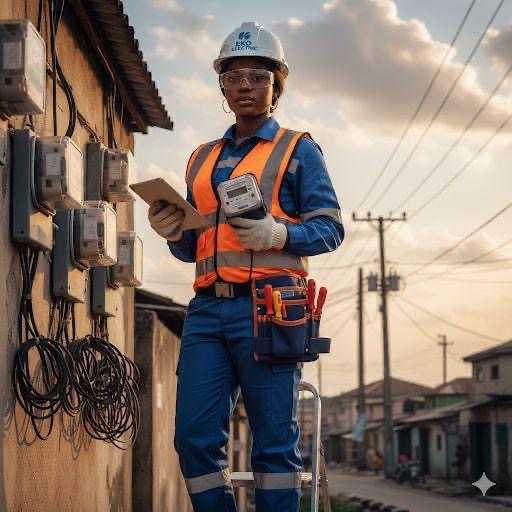
For this second premise to hold true, however, trainees have to seize the initiative and be hungry for self-development and growth. If you think of the electricity industry as having a skills ladder, meter installation would be the first rung, a starting point, delivering foundational skills and knowledge. A meter installer learns to read and interpret wiring, work safely and efficiently around live connections, understand single-phase and three-phase supply, handle testing instruments, and follow the regulatory and safety codes that govern any electrical work.
All of these are foundational competencies. From there an installer can progress towards becoming a licensed electrician or a distribution or network technician with a DisCo, or move into solar inverter installation, and even commercial and industrial wiring. Additional skills and education can open up opportunities within Nigeria’s growing band of local meter manufacturers. Today’s meter installer could very easily be tomorrow’s meter manufacturing technician.
Smart meter installation also works as a bridge vocation for people without a formal engineering background, helping them gain credentials and confidence. Installation programmes like Nigeria’s PMI-Install (launching in July 2026) provide a structured qualification with certification in a relatively short time, under a month in fact.
For a young person eager to build a technical career, certification as a smart meter installer provides a strong foothold: real income, hands-on experience, and a documented competency that can later be built on through further training and study.
There’s a strong entrepreneurial doorway too. Metering is an area of rapidly growing demand in Nigeria; the country needs to install over five million meters in the next few years to close the metering gap. Inverter systems, solar installation and general residential wiring are equally in high demand, as building construction races to keep up with population growth.
A trained meter installer can move from employee to contractor, building a small business installing and maintaining systems, hiring and training others in turn. In a market rapidly pivoting to solar systems and battery storage, that demand is unlikely to disappear anytime soon.
Another opportunity lies in the data side of smart metering. Smart meters collect and transmit usage data and analytics, and an installation technician who develops an interest in this can explore roles that are as much about data collection and analysis as about hardware.
But a caveat is necessary: this vision of career growth and progression in the electrical trade isn’t automatic. Without dedication and a commitment to personal growth and development, meter installation can become a dead-end job. What makes the difference, turning it into a doorway instead of a dead end, is individual initiative: trainees enthusiastically pursuing additional training, education and exposure.
On the surface, the story is that Nigeria is offering to train thousands of young people to help install meters, close the metering gap, and end estimated billing. In reality it’s deeper and more compelling than this. What Nigeria is actually doing is offering entry opportunities into an industry that is certain to see immense growth in the years and decades ahead.
PMI-Install is set to kick off very soon, in a matter of weeks in fact. The Presidential Metering Initiative will publish application details in due course. If you’re eligible and interested, this is a life-changing opportunity you must seize with both hands.